14 kilometers per shift & no one noticed
How a Motion-Mining® efficiency analysis uncovered 26% savings potential in order picking process optimization at Sulky
How a Motion-Mining® efficiency analysis uncovered 26% savings potential in order picking process optimization at Sulky
There are familiar logistics challenges that are difficult to quantify. For example, long walking distances between storage locations. Operators searching aisles instead of picking. There are also overhead picking motions that strain the back and slow down the shift.
You can see it. You can feel it. But you cannot accurately measure it – which makes it difficult to assess the true pain points and implement targeted process improvements.
Sulky GmbH, a specialized subsidiary of the GOLDNER Group, wanted to take a closer look at its order picking processes for hanging and flat goods and put an end to guesswork.
The result: savings potentials of up to 26%, identified through an automated efficiency analysis using wearables over a period of ten measurement days – without disrupting ongoing operations in any way.
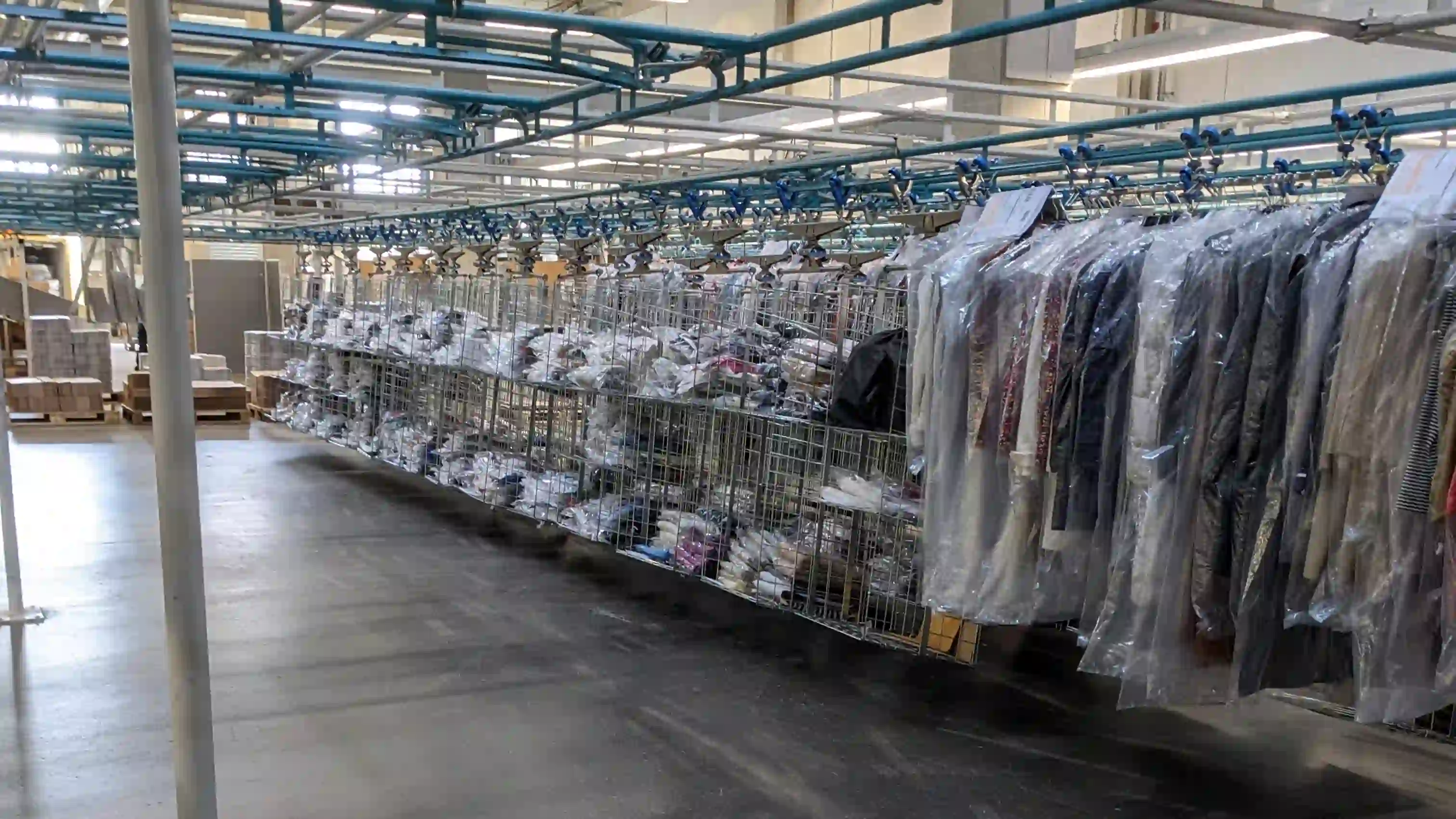
Sulky operates a five-level picking area for hanging and flat-packed goods. A total of 25 employees work in this process every day.
Management deliberately chose a data-driven approach: before defining improvement measures, the process needed to be fully understood. The objective was to create clear process transparency as the basis for sound decisions regarding efficiency and ergonomics improvements.
The Motion-Mining® principle: employee movements are captured automatically, fully anonymized, visualized, and analyzed – without cameras, without manual observations, and without interfering with operations.
Movement data was recorded across the entire picking area over ten measurement days. The results spoke for themselves:
On average, each employee walked 14 kilometers per shift. A significant portion of this distance was non-value-added, resulting from inefficient walking routes and lengthy search times within the aisles.
In addition, an ergonomic issue surfaced that had previously gone unnoticed: 19% of all handling operations were classified as critical, with a high proportion of overhead picking activities. Over time, these lead to physical strain and reduced process speed.
The process analysis identified three key levers for further process development:
Based on the collected data, the MotionMiners team developed practical, tailored recommendations. Each measure was monetarily evaluated and directly linked to the identified root causes.
No generic best practices but actions precisely aligned with Sulky’s picking processes.
Using Motion-Mining® data, Sulky was able to develop a clear and prioritized action plan.
The efficiency potential identified by the analysis amounted to up to 26%, based on picking process times.
Even more important from an operational perspective: the first improvements became visible shortly after project completion. No lengthy implementation phases. No months of uncertainty.
The Sulky project is not an isolated case. It reflects a recurring pattern in retail logistics: processes are running, yet no one truly understands them.
Optimization potential remains hidden due to the lack of objective data.
The lesson is clear: process optimization starts with measurement. Not with assumptions. Not with gut feeling. Rather, it should be based on validated process data and clearly defined KPIs captured through a structured assessment of the current state.
Motion-Mining® provides exactly this foundation. Automated. Anonymized. Without interfering with live operations.
Motion-Mining® is a technology for the automated and anonymized capture of movement patterns in logistics and production processes. Visualizing and analyzing this data makes it possible to identify inefficiencies, unnecessary travel distances, and ergonomic risks – forming the basis for targeted process optimization initiatives.
A consulting project typically includes a process walkthrough, target definition, on-site data collection, data analysis and interpretation, and the development of concrete improvement measures.Optionally, WMS, ERP, or MES data can be integrated for an even deeper efficiency analysis. Vehicle movements within processes can also be included.
The Motion Mining® project created a solid data foundation for targeted efficiency and ergonomics improvements, identifying a potential of up to 26%.
The measured average walking distance of 14 kilometers per shift clearly showed where processes can be simplified and value-adding activities strengthened.
Our free factsheet provides you with a comprehensive overview of our hardware and software solution.

Overview of the functions of the MPI Dashboard
Details about anonymization and data security
Technical specifications of the hardware and software

.webp)
%20(1).webp)