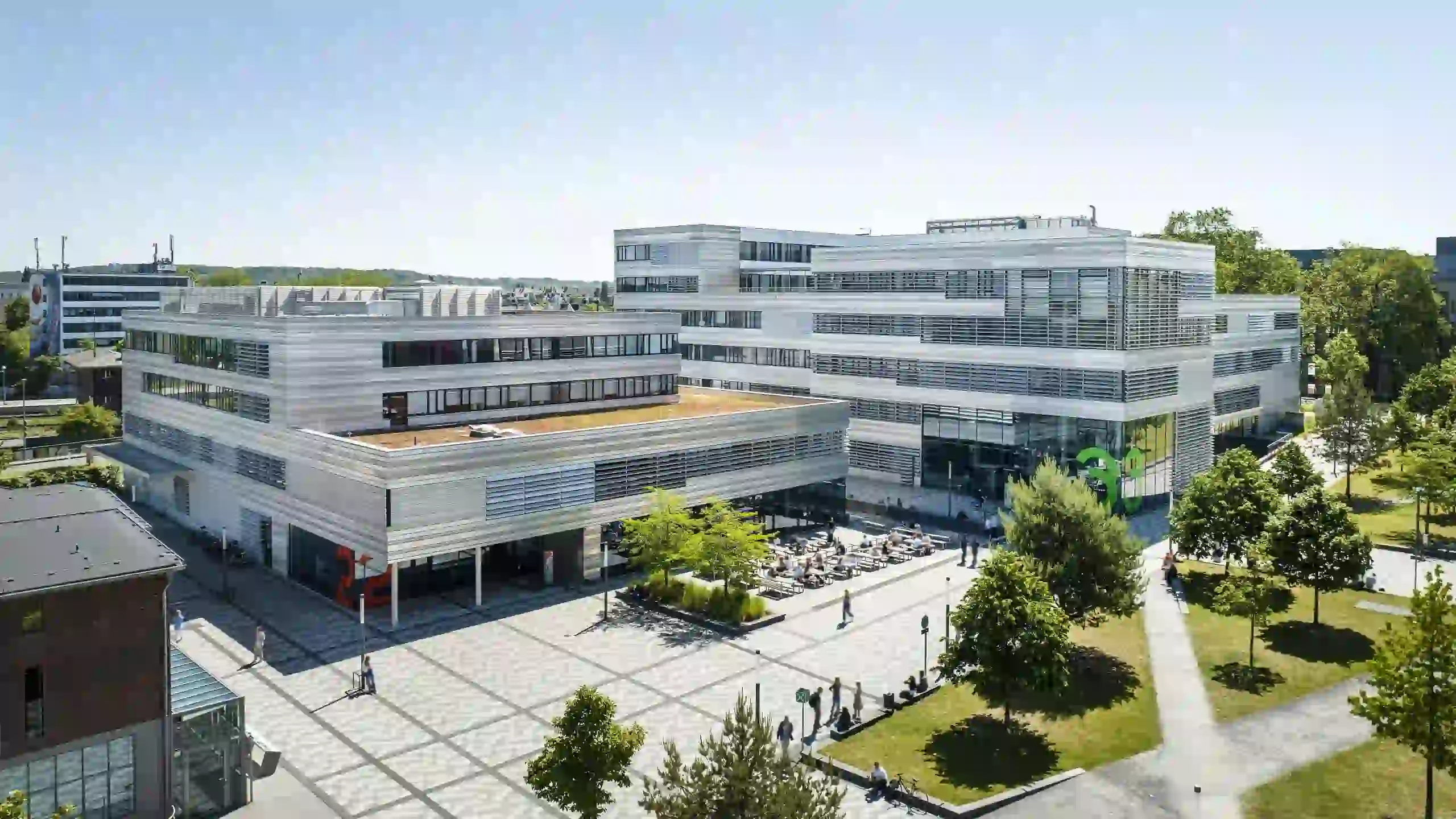
On the coast of Lower Saxony, in the small town of Elsfleth, Jade University has built something many universities are still planning. A fully equipped logistics laboratory where students experience, measure and optimize real picking and production processes. Motion-Mining® has been an integral part of this setup for almost three years.
A laboratory that takes practice seriously
The Department of Maritime Studies and Logistics at Jade University stands out not only because of its maritime tradition. At the Elsfleth campus, nautical training is combined with a strong focus on logistics and business. Five degree programs cover Maritime Business and International Logistics Management and are offered as full time, dual or part time formats.
At the center of the department is the logistics laboratory. A racking system, a production line for toy trucks and real operational processes. No simulation and no case study. Students pick, produce, analyze and immediately see the impact of their decisions.
Motion-Mining® was introduced after the technology was discovered at a logistics trade fair. The key question was quickly answered. If a real scenario already exists, it should also be measured using data.
From the lab to the factory: the sixth semester industry project
The core format where Motion-Mining® shows its full impact is the industry project in the sixth semester.
Students are responsible not only for data collection but for the entire project. This includes communication with the industry partner, scheduling, data analysis and final presentation of results. The lecturer takes on an advisory role.
What emerges is not an academic exercise. Students take on full project responsibility, deliver real analysis results and demonstrate how they handle unfamiliar situations. Each project concludes with a report and final presentation, just as in a real industry setting.
- What students gain
Technology application, data analysis, project management, client communication and presentation of results, all within one semester. - What companies gain
Real analysis results, new perspectives on their own processes and early contact with motivated young professionals. - What the university enables
Practice based projects as a structured connection between logistics education and regional industry.
What matters in practice
After almost three years of experience with Motion-Mining® in real companies, the key insight is clear. The main challenge is not the technology itself, but how people use it. Employees need to be guided, trained and motivated to use the sensors consistently. For this reason, the department recommends starting in a controlled laboratory environment. This allows teams to identify potential issues, test workflows and develop a sense for data quantity and quality before moving into real operations. The sequence also matters. First the hardware, then the analysis. This sequence contains more didactic value than it might initially suggest.
Quote Elizabeth Klimmek, who described Motion-Mining® in one sentence: Automate and visualize process analysis.
Where things are going next
The use of Motion-Mining® at Jade University is continuing to evolve. The technology is currently being further developed as part of a bachelor thesis. This highlights that the department does not only teach, but also continuously develops its approach. The combination of a logistics laboratory, industry projects and academic development makes Elsfleth a strong example of how applied research and practice based teaching can work together.
Recommendation from practice
Start with a controlled laboratory scenario. Identify challenges, understand workflows and first learn how to use the hardware correctly. Only in a second step should data analysis be expanded. According to experience, this is where the greatest learning effect for students occurs.
The Department of Maritime Studies and Logistics at Jade University's Elsfleth campus offers five degree programs in Maritime Business and International Logistics Management – practical, industry-connected, and featuring one of the few fully equipped logistics labs at a German university.


.webp)


%20(1).webp)