Agentic readiness in retail: Why process reality is the “missing link”
Three quarters of decision makers in retail are already using AI agents. This is shown by current analyses from the Forrester environment relating to NRF in the USA. Autonomous systems are no longer a vision of the future, but a reality.
Nevertheless, a crucial question remains unanswered in many organizations: Are our operational processes actually prepared to be controlled by AI agents?
The technology is available. There is a willingness to invest. But this is exactly where the weakness lies: not in AI, but in the database on which these agents are supposed to act.
Agentic readiness: more than just technology
Retail is currently undergoing fundamental change. AI agents optimize product ranges, predict demand and make fulfillment decisions. What sounds conclusive in theory, however, often fails in practice due to a decisive requirement: the so-called Agentic Readiness. This term describes the ability of an organization to provide AI agents with actionable, realistic and reliable data, in particular about manual and physical processes.
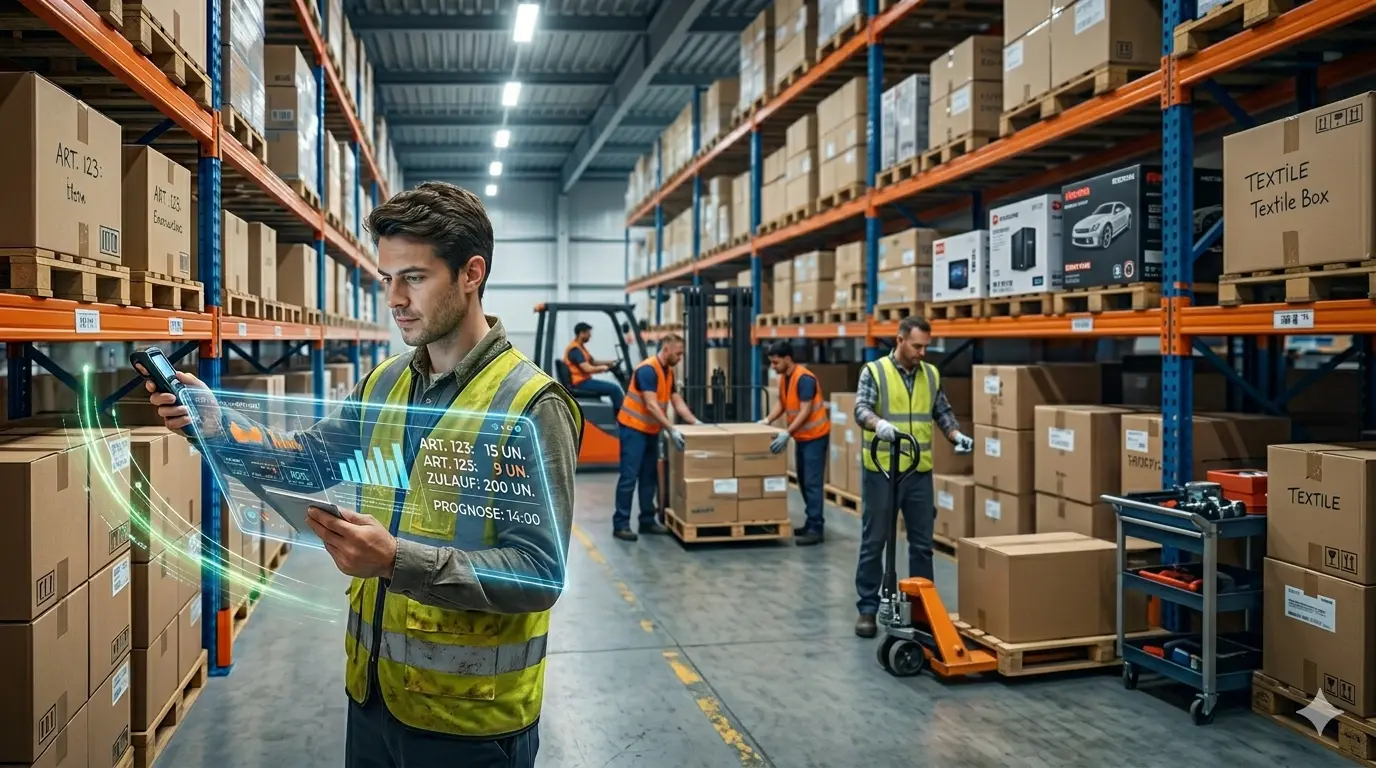
While ERP systems map transactions and dashboards visualize key figures, one key question remains unanswered: What actually happens in the warehouse, in the back office, when goods are received or directly on the shelf?
As long as this level remains invisible, the autonomy of the AI also remains limited.
The “action gap”: When planning and reality differ
A typical example from everyday retail life: An AI agent uses sales and inventory data to identify an undersupply. It then automatically triggers a reorder and plans to refill the shelves.
Everything works on paper. In reality, however, the shelf remains empty. Why Because bottlenecks arise that do not occur in any system:
Products are being searched for in the warehouse, distances are longer than planned, waiting times are caused by parallel tasks and processes are unergonomic and prone to errors.
The AI has made the correct decision, but the physical implementation fails.
We call this gap between digital planning and real execution as the action gap. It is created where manual work is not made transparent. And this is exactly where classic systems reach their limits.
Manual work processes are the blind spot
ERP systems record orders and bookings. Warehouse management systems log order status. Business intelligence tools use this to summarize key figures. What they all fail to do, however, is to visualize the actual work processes.
Especially in store and warehouse processes, the majority of the costs lie in manual activities — and these are exactly what often remain a black box analytically.
Typical variables that are unknown:
- Movements and travel times: How much time do employees spend running, searching or waiting in the process?
- Process variability: Which activities follow one another and where does reality differ from the planned process?
- Ergonomic loads: Which movements lead to fatigue, errors or loss of quality?
- Bottlenecks: Which small, recurring inefficiencies add up to a relevant loss of time?
For an AI agent who is supposed to control personnel deployment, replenishment or priorities, it is precisely this process reality that is the decisive factor Missing Link. Without this information, decisions are based on assumptions rather than facts.
Structural consequences are common: Decisions based on outdated or inaccurate inventory data, high manual costs without transparency about their causes, AI agents who work technically cleanly but plan ahead of reality operationally.
Physical Intelligence: The Bridge to Agentic Readiness
To close this gap, retailers need an additional perspective: physical intelligence.
Physical intelligence means recording the physical world of work with the same precision as we know it from online retail.
- movements
- times
- handovers
- stoppages
Technologies such as Motion-Mining® make these levels visible. Mobile sensors and indoor localization make real work processes objectively measurable — completely without a clipboard or stopwatch.
This is how the black box of manual work can be quantified for the first time:
- Actual routes instead of ideal routes
- Search times instead of accepted process steps Hidden waiting times and search efforts that the process model does not represent
- Bottlenecks that cannot be attributed to a classic key figure.
This data closes the action gap and provides the context that people and AI agents need to make valid decisions.
Agentic readiness is not an IT issue
Agentic readiness is often seen as a technological challenge involving interfaces, platforms, and algorithms. However, that falls short. In fact, Agentic Readiness is an operational issue.
It requires process transparency on site: in the store, in the warehouse, when goods are received. Only when digital system data is combined with real process execution does a reliable overall picture of the added value be created.
The journey to Agentic Readiness doesn't start in the data center. It starts where digital planning is translated into manual work. Anyone who ignores this missing link is investing in AI agents who, although technically impressive, fail operationally due to reality.




.webp)
%20(1).webp)